





Singapore has enough LNG until end-2026
Singapore has secured enough LNG from outside the Middle East to last through the end of this year, as state-owned buyer GasCo accelerated spot purchases to replace cargoes affected by disruptions around the Strait of Hormuz. Negotiations are underway long-term offtake from the US, Australia and Canada.
MidOcean Energy secures TAEF investment in LNG capital rise
MidOcean Energy has secured an $120 million equity investment from The Arab Energy Fund (TAEF) as part of its ongoing capital raise, targeting up to $2 billion from new investors.
Kinetic LNG secured $125 million investment from Actera
Kinetics LNG has secured a $125 million investment from Turkish private equity firm Actera Group to help fund the expansion of its floating LNG business, targeting emerging markets.
Gas to Power – May 22, 2026
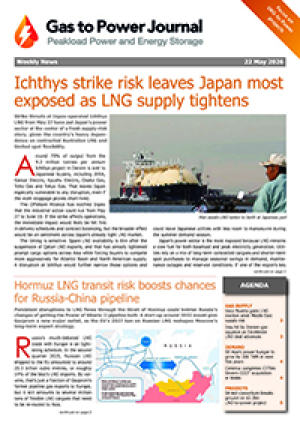
Click to Download
LNG Shipping News - 21 May 2026
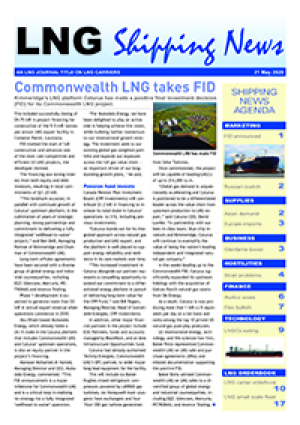
Click to Download
Commonwealth LNG takes FID
Kimmeridge’s LNG platform Caturus has made a positive final investment decision (FID) for its Commonwealth LNG project.
Switching Russian LNG from Europe to Asia at a cost
Russia's LNG switch to Asia after the loss of the European market will hit its revenue, due to at least a doubling of logistical costs, industry sources and analysts told Reuters.
Asian LNG demand recovery seen
Early signs of a recovery in Asian LNG demand are emerging, potentially tightening global balances and creating a European gas upside price risk, Goldman Sachs said in a note late last week.
Europe to import 80% of its LNG needs from US - IEEFA
European countries will import around 80% of their LNG supplies from the US by 2028, a report from the Institute for Energy Economics and Financial Analysis (IEEFA) predicted.
Glenfarne ties up ConocoPhillips
US-based developer, Glenfarne Alaska LNG, a subsidiary of Glenfarne Group, has signed a gas sales precedent agreement to supply natural gas produced at Alaska’s North Slope for Alaska LNG project Phase 1 to ConocoPhillips Alaska.



