





US offers sanction relief, higher Russian LNG exports in peace talks
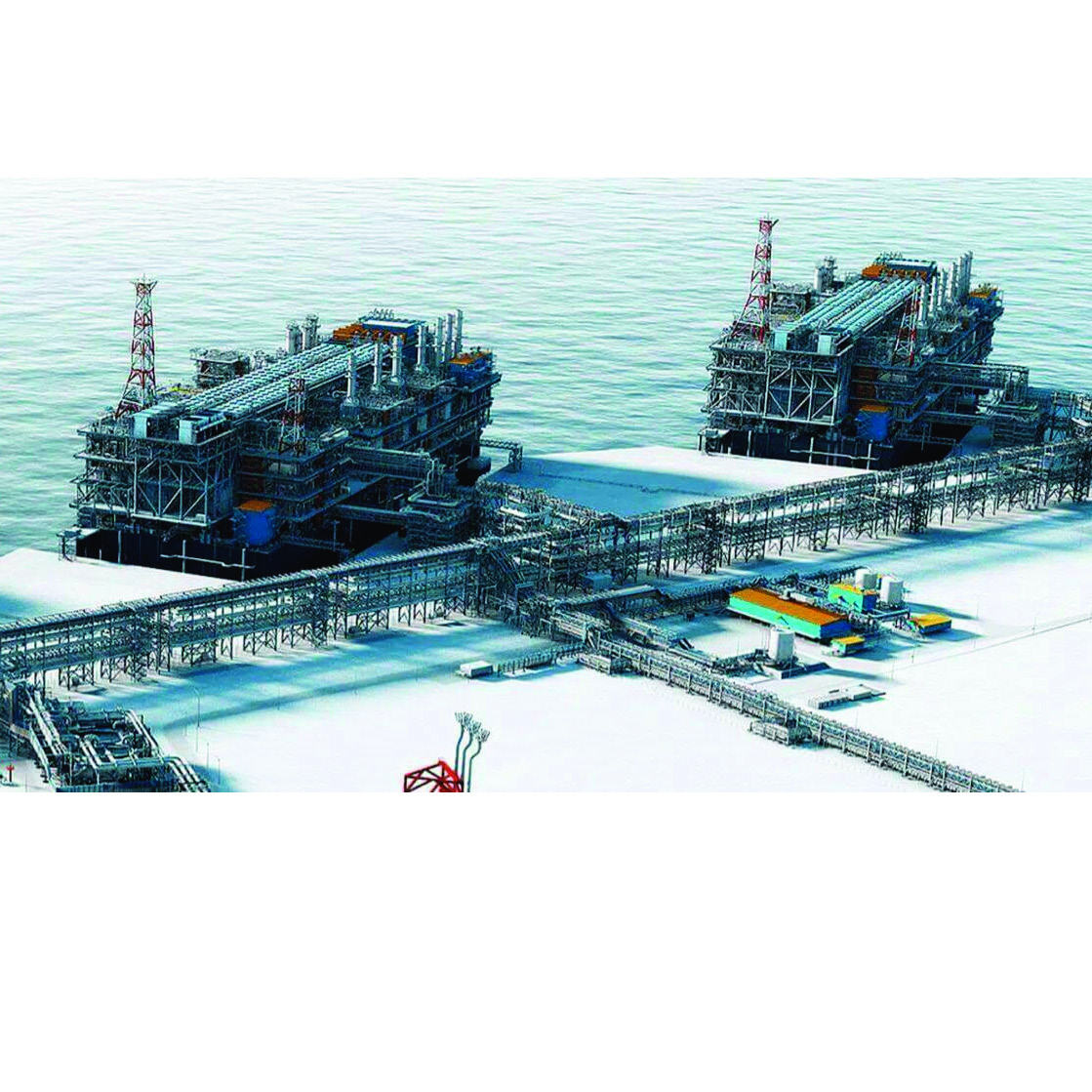
The Trump administration is working on ways to ease sanctions against Russia, if the war in Ukraine comes to an end. Greater LNG exports from Vysotsk, Portovaya and the first two 6.6 mtpa trains of Arctic LNG 2 facilities are seen as ‘options’ for the United States to offer a sanctions relief in exchange for peace.
 |
London-based Energy Aspects remains bullish on TTF bal-2025 prices, assuming Russian gas exports to Europe do not return – at least not any time soon. Gazprom had terminated pipeline gas transits through Ukraine at the start of 2025, and Russian LNG is currently mainly reaching Europe via the Kremlin’s shadow fleet of ageing tankers.
Enabling Russian LNG exports under a US sanction relief would contradict American commercial interest and President Trump’s ‘energy dominance policy.’
Yet, foreign policy of the new US administration is anything but certain: “It is possible that Trump’s drive for peace and to see Russian gas return will override his energy dominance policy and desire to narrow the trade deficit with Europe. We are not yet making this our base case, as Trump has other sanctions relief measures he can deploy,” Energy Aspects stated, referring to options like loosening US financial and trade sanctions that impact the whole Russian economy.
Brokering a peace deal will take time, and may well be month away as the positions still differ starkly. The longer it takes, the less time would be left for Russian gas supply to help bolster Europe’s stock-build prior to the next winter.
Expiry of US Treasury waivers impact Russian exports via Turkey
Supply risks escalated after temporary US Treasury waivers that permit gas purchases via the now-sanctioned Gazprombank will lapsed.
The US Treasury confirmed the General License 8L expired as scheduled on Wednesday last week as the Trump administration is putting pressure on Russia to improve his and Ukraine’s stance in peace talks with the Kremlin. Letting the license expire means that Russian banks now can no longer access US payment systems for energy financing or transactions related to oil and gas exports.
If no alternative payment mechanisms can be agreed, Europe might lose out on the 16 bcm/y that is shipped to European buyers through TurkStream, the 24 bcm/y shipped to Turkey through TurkStream and Blue Stream pipelines. Moreover, the 38 bcm/y of Russian gas exported to China through Power of Siberia pipeline and potentially around 5–10 bcm/y transported to buyers in Central Asia is also at risk.
Doubts mount that the US Treasury will extend waivers following of Russia’s bombardment of Ukrainian gas and power infrastructure in recent weeks. Destructions and halted gas flows from Gazprom made Naftogaz turn to elsewhere for supply. Ukraine has, in fact, stepped up its imports from Europe over recent weeks and Energy Aspects expects it to take 1.7 bcm from Europe this year, in contrast to net exports of 0.7 bcm last year, cautioning there is “more upside than downside risk” to these numbers.
Financial trade amplifies price swing at TTF in tight market
Financial, not physical trade is amplifying price swings at the Dutch TTF as Russian gas exports to Europe are unlikely to return. Hedge funds had to cut their positions after higher price volatility increased their value at risk (VaR), though analysts reckon there are many CTA buying levels starting in the low €40s/MWh.
Trucking, not power gen drives China’s LNG demand – for now
LNG use for transport is driving infrastructure investment in China, where the fleet of LNG-fuelled trucks nearly tripled over the past five years. Government data indicates, however, utilities liquefy enough domestic gas to meet trucking demand – while battery electric trucks are about to outcompete LNG-fuelled ones.
“China’s surge in LNG trucks will not last” and is likely to ease by 2030, Wood Mackenzie reckons. As battery technologies advance, electric vehicles are expected to displace LNG as the main threat to diesel – and demand for the dirty fuel is hence forecast fall from 2.3 million b/d in 2023 to 0.7 million b/d by 2050.
“LNG-powered trucks are gaining in popularity, but should only be seen as a bridging solution,” said Shiqing Xia, WoodMac consultant for Oils and Chemicals. “Investment in electric or hydrogen fuel cell trucks to respond to future market demands will not only help to meet environmental requirements, but could also give companies a long-term competitive advantage.”
Affordability issues
In India, the affordability of LNG is a main stumbling block – both for burning imported gas to generate electricity and also for combusting LNG as a transport fuel. The fertilizer, for once, consumes substantial LNG volumes in India though this demand largely hinges on government subsidies, handed out to keep low consumer prices.
Imported gas still costs too dear for the world’s emerging economies, Bloomberg finds, but analysts are optimistic that a supply surge starting from 2027 will bring down fuel costs in Asia.
Analysts question Shell’s bullish case for LNG market growth over the next 15 years. This year, the company increased its demand expectations to between 630 and 718 mtpa by 2040, some 1-5% higher than last year’s projection.
Dwindling demand for imported fuels
Yet, LNG demand has remained limited in sectors that do not receive fiscal support. According to IEEA analysis, global LNG prices would have to fall by half to compete in power generation, where gas provides less than 2% of the electricity mix.
“With the exception of China, natural gas consumption has grown mainly in countries that produce enough gas to either be self-sufficient or net exporters, like the U.S. By contrast, gas demand has tended to fall in markets that require large import volumes, like Europe and Japan,” IEEFA’s Sam Reynolds and Christopher Doleman commented.
Looking at Vietnam, downside risks get more pronounced: The country’s latest Power Development Plan initially targeted 22 gigawatts of LNG-fired power capacity by 2030, but a recent draft revision lowered the target to 18 GW due to slow progress.
Only one LNG plant with 1.6 GW of capacity has secured a power purchase agreement to date, and analysts fear that very few other projects may be operational before 2030. Factoring in fuel costs, it’s worth noting that Vietnam’s wind and solar generation now exceeds gas-fired power, which dwindled 45% over the past ten years.
Kpler data shows that the volume of LNG traded in 2024 grew by its lowest level since 2012 which makes analysts questions oil majors’ bullish stance on global gas demand. In fact, Shell’s latest LNG Outlook departs from previous arguments: It downplays LNG’s role in the power sector and no longer emphasizes claims that LNG can displace coal in Asia. Instead, Shell argues that data centres and AI will drive long-term LNG demand, though this remains uncertain.
Australians eye nuclear energy, though grid stability hinges on LNG
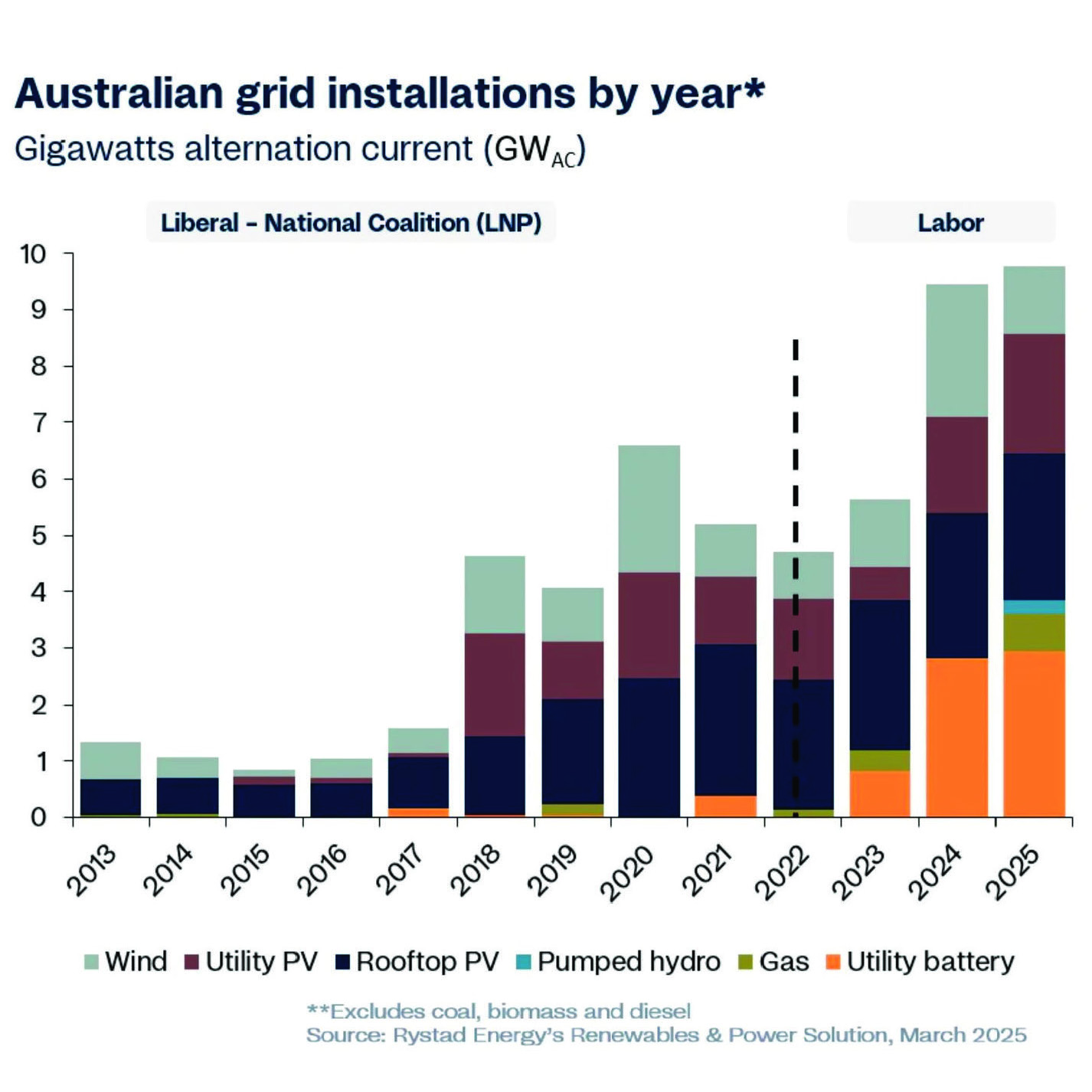
A substantial 13 GW of nuclear capacity built by 2051 is meant to replace coal generation in Australia, if the Liberal National Party (LNP) wins the federal election in early May. The incumbent Labor government targets 82% renewable energy – though short-term grid stability hinges on dispatchable gas power plants, partly fuelled by imported LNG.
 |
Shipping uncontracted LNG from northern Australia to southern states is paramount to avert a power crunch. Domestic gas demand has for long clashed with LNG export ambitions of the likes of Santos, Woodside, Orgin Energy and BG Group.
Yet LNG imports may soon be called for, the Australian Energy Market Operator (AEMO) warns as gas output in southern Australia stands to dwindle by 40% from 1,260 Terajoule per day (TJ/d) currently to just 740 TJ/d in 2028.
New South Wales (NSW), Australia’s most densely populated state, already relies largely on the ExxonMobil-operated Gippsland basin joint venture for gas supply and a part closure of the 1,150 TJ/d Longford facility earlier this year exacerbated supply risks.
Several FSRUs lined up
Several prospective import projects are taking shape: The Outer Harbor FSRU, for starters, is an LNG import terminal under construction in Australia, close to the Pelican Point gas-fired power station in Port Adelaide. Venice Energy, the project owner, is partnering with AG&G LNG and GAS Entec for the delivery of a converted floating regas unit with a capacity of 1.1 mtpa.
Squandron Energy, meanwhile, announced its 2.4 mtpa Port Kembla Energy Terminal in NSW is ready to enter operations on Dharawal land. Developers said the terminals will have the capacity to supply 500 TJ/d – enough to meet nearly all of NSW’s gas needs on a peak day. Analysts reckon the terminal could cover the states entire winter demand of roughly 481 TJ/d, excluding gas-fired generation.
Yet, despite completion, LNG shipments are not scheduled to arrive until early 2026 when the designated FSRU, Höegh Galleon, will make its way to Port Kembla. This timeline aligns with projections of the Australian Competition and Consumer Commission which anticipates gas shortages in the eastern states from early next year. Hoegh Galleon FSRU would be utilized for the terminal under a 15-year contract. Commissioning and start-up had to be pushed back to the second quarter of 2026, to secure sufficient demand for the terminal’s capacity.
Re-jigging contracts
Down-under, as Australia is colloquially called, the energy landscape is in disarray. Upstream majors seek to renegotiate contracts for LNG exports and domestic gas sales with a view to securing a more equitable share of profits and reinvesting a part of them in renewable technologies. According to Andrew Dyhin, principal consultant at CHATO, “this strategy mirrors how Middle Eastern countries have leveraged oil wealth to diversify and build sustainable economies.”
The cost of imported LNG is, however, up to 25% higher than pipeline gas, especially in the winter season: The AVX, Argus' assessment for month-ahead spot gas deliveries to Victoria, averaged A$12.46/GJ in late December – while the Gladstone FOB price, a netback indicator calculated by subtracting freight and production costs from the delivered price of LNG in Asia-Pacific — averaged A$16.03/GJ for the same period.
Australians eye nuclear energy, though grid stability hinges on LNG
A substantial 13 GW of nuclear capacity built by 2051 is meant to replace coal generation in Australia, if the Liberal National Party (LNP) wins the federal election in early May. The incumbent Labor government targets 82% renewable energy – though short-term grid stability hinges on dispatchable gas power plants, partly fuelled by imported LNG.
Expand Energy’s growth of Haynesville output hinges on LNG demand
Strong global LNG demand has prompted Expand Energy to allocate up to $1.2 billion for drilling and completing rigs in the Haynesville Basin, 4% of its total drilling Capex. These monies spent cater for seven to nine new rigs as Expand Energy is the most cost-efficient player in the Haynesville, with a 12-month weighted average breakeven cost of $2.0/mcfe.
Petronas and Eni to create new Southeast Asian energy major
Eni’s gas discovery in the Kutei Basin, Indonesia, and Petronas’ stake in the Abadi LNG development are likely to form key parts of a new Southeast Asian energy major. The Malaysian national oil company and its Italian partner announced plans to merge selected upstream assets into a new, standalone joint venture.
Additionally, Wood Mackenzie expects Petronas to contribute production and exploration assets in Sarawak and Sabah from its domestic portfolio in Malaysia into the new JV. Petronas’ largest domestic oil and gas producing field is the SK316 block in Sarawak, which includes the Kasawari development.
“Managing capital commitments, unlocking new growth opportunities and broadening strategic relationships are the key drivers behind the formation of the new venture,” commented Andrew Harwood, Wood Mackenzie’s VP corporate research, Asia Pacific.
Going forward, the standalone company will have an estimated 3 billion barrels of oil equivalent (boe) in reserves and a combined equity production target of 500,000 boe per day in the medium-term.
For Eni, the move follows similar ventures in Angola, (Azule Energy in partnership with BP), Norway (Var Energi), and the UK (Ithaca). Previous spin-offs by Eni sought to unlock value from non-core assets that struggled to attract capital within a larger portfolio.
But the situation is different in Indonesia – poised to turn out one of the largest producing countries in Eni’s global portfolio by the early 2030s.
Kosmos halves 2025 Capex budget, seeks to cash in on GTA project
Kosmos Energy has halved its forecast 2025 capex budget to $400 million after posting a $7 million net loss in the fourth quarter. The independent oil and gas producer now prioritises on generating free cash flow, notably from the Greater Tortue Ahmeyim (GTA) project where a first LNG cargo is lined up.
Expectation of quick return of Russian gas flows make TTF prices ease
Prices at the TTF, Europe’s most liquid gas trading hub, have eased amid expectations of a “swift comeback of Russian gas deliveries” as a Ukraine peace deal is in the making. "The Ukraine gas transit remains the most viable option for increasing pipeline flows from Russia to Europe,” analysts reckon, while TTF front-month prices shed some 14.6% week-on-week in a bearish market.
The TTF front-month future contract for March was last seen trading at $14.483 per MMBtu, down nearly 15% compared to a week earlier. The steep drop was caused by hopes among market participants for additional Russian pipeline gas following a phone call between US President Donald Trump and Russian President Vladimir Putin.
But despite narrowing summer-winter backwardation in the forward curve, Rystad’s senior analysts Christoph Halser calls for caution, suggesting "a swift return of Russian supply remains uncertain."
Taking a precautious stance, the EU Commission is rumoured to may publish revised, and likely more flexible, storage targets on 26 February which added to this week’s bearish momentum on gas markets. Amid bearish expectations, the backwardation in the forward curve between summer and winter narrowed. The difference between July 2025 and January 2026 delivery at the TTF was seen decline from $1.38 per MMBtu on 11 February to $0.81 per MMBtu at the end of last week.
Cold freeze pushes up Henry Hub price
Across the Atlantic, freezing temperatures in North America pushed Henry Hub prices to their highest level since late December 2022.” The return of winter saw Henry Hub front-month prices reaching $4.37 per MMBtu on 19 February, up 22.6% from the previous week. Extreme cold across large parts of the US East, Midwest and Mountain regions had pushed up gas demand for heating and electricity generation.
The cold snap also poses a risk of reducing production as regional well freeze-offs loom large. Dry gas production fell to 103.6 billion cubic feet per day (Bcf/d) at the start of the week, down from 106.7 Bcf/d in early February.
On the demand side, a 3.7% week-on-week uptick in feedgas further added to bullish momentum, reaching 16.17 Bcfd on 18 February, up from 15.6 Bcfd the previous week. This was primarily driven by the ramp-up of the Plaquemines LNG project and higher nominations at Sabine Pass.
EU member states urged to stop importing Russian spot LNG cargoes
Imports of Russian LNG into the EU have soared – regardless of sanctions – with most shipments headed to France, Spain and Belgium and a third of cargoes imported as spot trades. Analysts urge EU members states to prioritise on phasing out these flows.



