





The Australian state of Queensland could face the partial shut-down of a third of its LNG export capacity by the middle of the 2020s due to a shortage of feed-gas supplies, together with the increasing need for diversions of natural gas to maintain domestic market security.
 |
“This would cut output to four LNG production Trains from the current six Trains built on Curtis Island off Gladstone by three project owners,” according to a new report from Australian consultants EnergyQuest.
The Queensland LNG plants have been built at a cost of around A$84 billion (US$60Bln) and came on stream between 2014 and 2016.
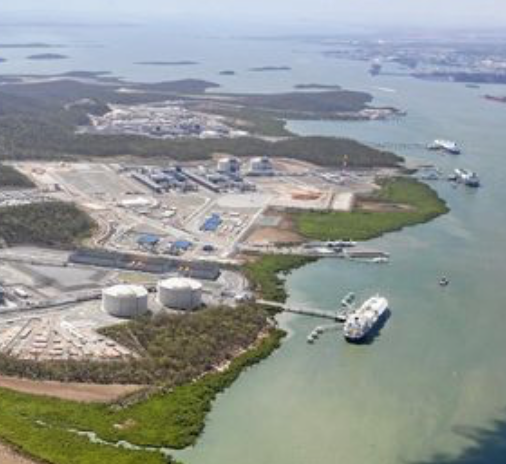
Our photo shows all three plants built in a row on Curtis Island near the port of Gladstone.
They comprise the Queensland Curtis plant, operated by Royal Dutch Shell and on stream since 2014, the Gladstone LNG plant, operated by Santos of Australia and which started up in 2015, and the and Australia Pacific plant, operated by US major ConocoPhillips since 2016.
“Underpinning the production noose is an emerging forward reliance for feedstock on gas reserve estimates that could fall well below delivery expectations,” according to the EnergyQuest report.
All three projects rely on coal seam gas (CSG) sourced from the Bowen and Surat Basins, a less conventional gas source than feeds Australia’s successful west coast LNG industry.
The report’s findings show that there are now doubts about sufficient Queensland CSG gas being available for the three Gladstone plants to ever achieve full-scale production.
The plants operated at an average of only 82 percent capacity in calendar 2018.
“Crunch time is expected by 2025 and will be exacerbated by potential political pressure for Gladstone LNG operators to divert gas to the domestic market,” said EnergyQuest.
“Any Gladstone plant shut-down is not expected to dampen Queensland’s new status as a major global LNG supplier, but its LNG potential has been summed up as - now is as good as it will get,” stated the report.
“The findings above have emerged from EnergyQuest’s most intensive scrutiny yet of the Queensland LNG sector’s exploration, production, supply, price and market risk outlook,” according to the work undertaken over the past year by Adelaide-based EnergyQuest, led by its Chief Executive, Dr Graeme Bethune.
EnergyQuest said it adopted a “ground up” approach to intensely analyse corporate and government drilling data from 10,000 Queensland CSG wells as well as reserves bookings, prospects and production licences.
The Queensland concerns form part of a broader 130-page EnergyQuest report titled, the “East Coast Gas Outlook to 2036”, to be released in full next week.
The findings will also be presented to industry peers at the Australian Gas Outlook Conference to be held in Sydney from March 4.
The three Australian East Coast projects are all successfully producing, with China the biggest market (70 percent of 2018 Queensland exports) followed by Korea (16 percent ) and Japan (9 percent).
However, the report believes that two projects, the QCLNG and the GLNG facilities, are operating well below capacity due to insufficient gas supply and diversions to the domestic market.
In 2018, QCLNG averaged 87 percent capacity utilisation and GLNG only 65 percent.
“Unfortunately, there are serious headwinds coming and the outlook is less rosy as the industry over-reached by building three projects of six trains,” said the report.
“Queensland will remain a significant LNG exporter, one of the world’s largest, but with more like four trains fully utilised, reducing medium-term exports to around 17 million tonnes per annum (MTPA),” it added.
Bethune stated that while the three plants have a combined nameplate capacity of 25.3 MTPA, there is simply insufficient gas to run the plants at capacity and also meet the supply the needs of the domestic market.




