





Bangladesh currently has one LNG floating storage and regasification unit as an import terminal at Moheshkhali Island and a second is set to arrive in April. However, four other FSRU projects have been dropped as policy switches to larger land-based terminals.
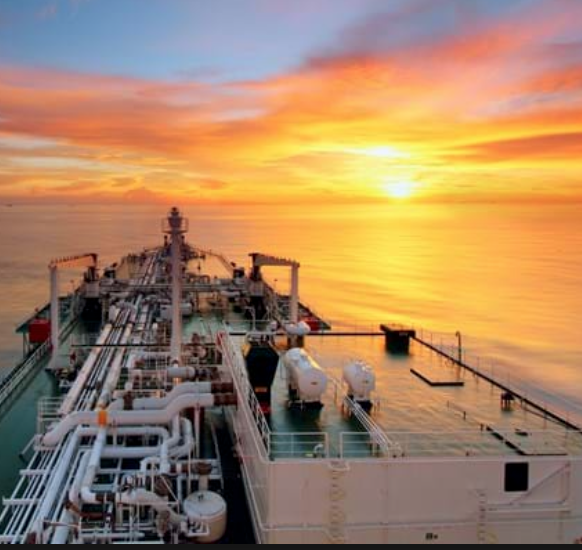 |
The Moheshkhali FSRU is operated by Excelerate Energy of the US and a second FSRU will be deployed in the second quarter by Summit LNG near the town of Cox’s Bazar in southeast Bangladesh.
The latest FSRU is a 138,000 cubic metres capacity vessel currently being refitted at dry dock by the N-KOM shipyard in Ras Laffan in Qatar.
Summit LNG is a subsidiary of the largest independent power producer in Bangladesh, owned by the Summit Group, whose Chairman is Muhammed Aziz Khan.
Summit operates 20 power plants in Bangladesh with an aggregated installed capacity of 1,941 megawatts comprising 20 percent of Bangladesh's total capacity in the private sector.
The Bangladeshi power company behind the second FSRU has also taken up $3 billion of investment from Japan’s Mitsubishi Corp and from General Electric in the US.
The second FSRU terminal is likely to be the last for some time as Bangladesh appears to be shifting its policy in favour of a large-scale onshore terminals.
In late January 2019, Rupantarita Praktrik Gas Co. Ltd (RPGCL), a subsidiary of national energy company PetroBangla, published a request for expressions of interest in developing an onshore LNG terminal.
The interested party chosen would be asked to build, own and operate an onshore terminal for a period of 20 years with 7.5 million tonnes per annum of capacity.
The developer would also procure, store, regasify LNG and deliver the gas to Bangladesh’s national gas grid.
The onshore terminal will be located in Matarbari, 20 kilometres north of the existing FSRU import facility at Moheshkhali and is scheduled to start up in June 2023.
PetroBangla and the government had in late 2018 chosen not to proceed for now with four other import projects - all using FSRUs - and proposed separately be global commodities firms, Trafigura and Gunvor, Reliance Power of India and Hong Kong Shanghai Manjala Power Ltd.
These four FSRU ventures had capacities ranging from 700,000 tonnes per annum of LNG deliveries to 3.7 million tonnes per annum of cargoes.
According to consultants Facts Global Energy, the government has apparently decided that larger-scale onshore terminals would better suit its requirements when compared to smaller-scale FSRUs.
“Bangladesh’s LNG demand will rise to levels strong enough to support onshore terminals with such capacity,” said the FGE report.
The nation’s own domestic production is declining while its development needs mean that energy and power demand is growing year by year.
“While an onshore terminal would require higher capital expenditures when compared to an offshore terminal, operating costs can be significantly lower, making them ideal for long-term LNG imports,” added the report.
Another change is seen in the role of the terminal operator. In all of Bangladesh’s previous LNG proposals, the terminal developer’s role was limited to operating the terminal, while PetroBangla, through its subsidiary RPGCL, would pay a tolling fee to receive and regasify LNG at these terminals.
This was the case in previous projects put forward for Bangladesh.
However, in RPGCL’s latest request for expressions of interest, the developer of the terminal, aside from operating the facility, would also procure and regasify the LNG for downstream marketing.
Through this, the government has indicated that it will deregulate its LNG imports policy and encourage private players to import and regasify LNG and to market the gas.
“A new LNG import policy is reportedly being drafted by the government and at this point, it is still unclear if the private players will sell the gas to state-owned gas distribution and marketing companies or will be required to aggregate downstream demand across all sectors,” explained the FGE report.
“While the government’s move away from FSRUs to onshore terminals validates LNG’s long term role in the energy mix, it will dampen LNG demand growth through the early 2020s,” it added.
A land-based terminal would take longer to plan and construct. In comparison, FSRU-based terminals are known to start-up with significantly reduced lead times especially when an existing FSRU is used.
“Terminal infrastructure limitations will dampen LNG demand growth over 2022-2023 until the start-up of RPGCL’s onshore terminal in 2024,” said the report.
“Through the early 2020s, more than 3 GW of coal-fired capacity will come online to meet the nation’s growing power demand. We expect Bangladesh’s LNG demand to remain at a little over 8 MTPA over 2022-2023 before rising to 12.3 MTPA in 2025,” it added.
Currently, PetroBangla is the sole LNG importer and has two LNG supply agreements, a 15-year deal for 2.5 MTPA from Qatargas and a 10-year deal for 1 MTPA from Oman Trading International.
Bangladesh received its first LNG cargo from Qatar in 2018 and Oman commenced LNG deliveries in late January 2019.




