





South Korea targets 18.8% share of LNG in power mix by 2030
Executives of South Korea’s state-run utility KOGAS have visited Alaska as the Ministry of Trade, Industry and Energy (MOTIE) targets to increase the share of LNG in the power gen mix from 16.9% currently to 18.8% by 2030. US LNG imports to Korea already more than doubled year-on-year amid an ongoing Free Trade Agreements renegotiation.
US LNG industry seeks exemption from Trump’s shipping rule
The American Petroleum Institute (API), whose members include Exxon Mobil, Chevron and Cheniere Energy, is calling on President Trump to exempt LNG tankers from a new rule. The novel regulation mandates producers to move 1% of their exports on US-built ships starting from April 2028, and that share would rise to 15% from April 2047 onwards.
The policy sent shockwaves through the industry when announced by the US Trade Representative on April 17. In a first response, API told the U.S. Energy Secretary Chris Wright and National Energy Dominance Council Chair Doug Burgum the ruling would risk to counteract progress of the Trump administration towards unleashing US LNG sales.
Individual US LNG vendors who do not comply with the rule risk to lose their export licenses, even though the percentages apply to the overall shipping industry and to vessels that LNG exporters do not own and control, API warns.
Quest to get rule abolished
The industry group has rushed to foster closer relation with USTR in a quest to get the rule amended, if not abolished. The aim is to ensure “feasible and durable policies that benefit consumers and advance American energy dominance," said Aaron Padilla, API's vice president of corporate policy.
Today, there are 792 LNG carriers in operation around the world, according to the AXS Marine shipping consultancy. Out of that total, the number of ships built in South Korea and Japan is 703 combined. Some 58 LNG carriers were built in China – and just five come from US shipyards and these 1970-era ships are laid up and currently not in operation, AXS Marine specified.
Unfeasible deadline
There is no way that US shipyards can churn out vessels fast enough to meet the deadline set by USTR and the Trump administration, market participants warn. "There are no such vessels in existence today, and building them would take decades, making compliance impossible for the industry," Charlie Riedl, executive director at the Center for LNG, told Reuters in a statement.
In fact, it would take five years to build one LNG carrier at either of the two American shipyards that have sufficiently long docks to build such a vessel. API CEO Mike Sommers hence urged the Trump administration “to exempt crude oil and refined product imports and exports - consistent with this Administration's approach to exempt these same products from baseline and reciprocal tariffs.”
US offers sanction relief, higher Russian LNG exports in peace talks
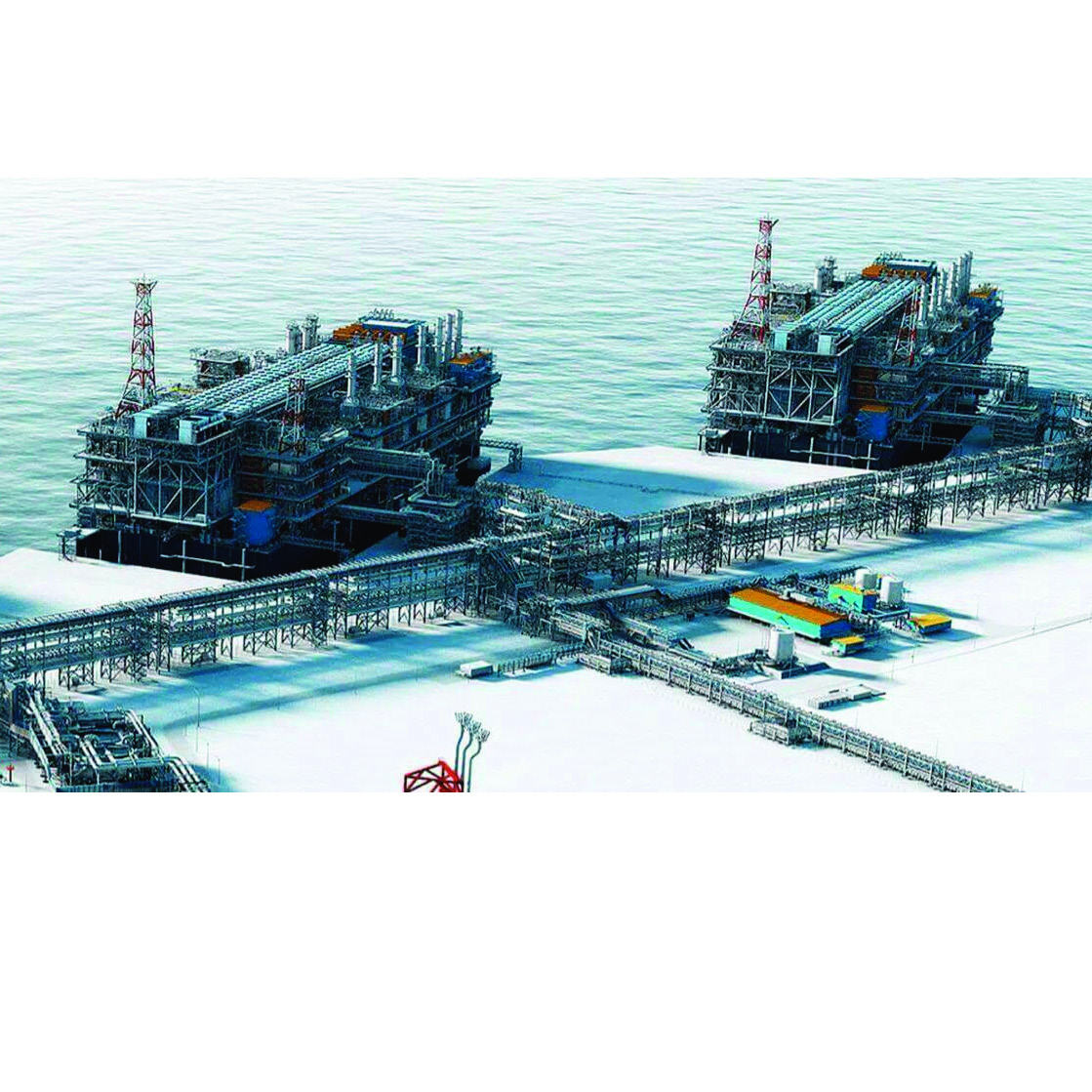
The Trump administration is working on ways to ease sanctions against Russia, if the war in Ukraine comes to an end. Greater LNG exports from Vysotsk, Portovaya and the first two 6.6 mtpa trains of Arctic LNG 2 facilities are seen as ‘options’ for the United States to offer a sanctions relief in exchange for peace.
 |
London-based Energy Aspects remains bullish on TTF bal-2025 prices, assuming Russian gas exports to Europe do not return – at least not any time soon. Gazprom had terminated pipeline gas transits through Ukraine at the start of 2025, and Russian LNG is currently mainly reaching Europe via the Kremlin’s shadow fleet of ageing tankers.
Enabling Russian LNG exports under a US sanction relief would contradict American commercial interest and President Trump’s ‘energy dominance policy.’
Yet, foreign policy of the new US administration is anything but certain: “It is possible that Trump’s drive for peace and to see Russian gas return will override his energy dominance policy and desire to narrow the trade deficit with Europe. We are not yet making this our base case, as Trump has other sanctions relief measures he can deploy,” Energy Aspects stated, referring to options like loosening US financial and trade sanctions that impact the whole Russian economy.
Brokering a peace deal will take time, and may well be month away as the positions still differ starkly. The longer it takes, the less time would be left for Russian gas supply to help bolster Europe’s stock-build prior to the next winter.
Expiry of US Treasury waivers impact Russian exports via Turkey
Supply risks escalated after temporary US Treasury waivers that permit gas purchases via the now-sanctioned Gazprombank will lapsed.
The US Treasury confirmed the General License 8L expired as scheduled on Wednesday last week as the Trump administration is putting pressure on Russia to improve his and Ukraine’s stance in peace talks with the Kremlin. Letting the license expire means that Russian banks now can no longer access US payment systems for energy financing or transactions related to oil and gas exports.
If no alternative payment mechanisms can be agreed, Europe might lose out on the 16 bcm/y that is shipped to European buyers through TurkStream, the 24 bcm/y shipped to Turkey through TurkStream and Blue Stream pipelines. Moreover, the 38 bcm/y of Russian gas exported to China through Power of Siberia pipeline and potentially around 5–10 bcm/y transported to buyers in Central Asia is also at risk.
Doubts mount that the US Treasury will extend waivers following of Russia’s bombardment of Ukrainian gas and power infrastructure in recent weeks. Destructions and halted gas flows from Gazprom made Naftogaz turn to elsewhere for supply. Ukraine has, in fact, stepped up its imports from Europe over recent weeks and Energy Aspects expects it to take 1.7 bcm from Europe this year, in contrast to net exports of 0.7 bcm last year, cautioning there is “more upside than downside risk” to these numbers.
Trump administration poised to push for US energy dominance
The new US administration is pushing for deregulation and American energy dominance on global markets by fast-tracking permitting for LNG terminals and related infrastructure. Such policies are poised to boost oil and gas production and underpin US LNG export growth.
President-elect Donald Trump has already outlined a radical shift in US energy policies which is expected to spur investment in the upstream sector, as well as related pipelines to bring shale oil and gas from America’s major unconventional oil and gas basins to liquefaction terminals along the US Gulf Coast. Rising shale oil and gas production is bound to create a supply length and free up additional gas resources for liquefaction and export, as well as for the American downstream market, notably for the power gen and industrial sector, analysts at Rystad Energy reckon.
In his pro-energy agenda, Trump vowed to override and reverse Biden-era regulatory pauses on US LNG export projects and increase leases on federal land for fracking of unconventional oil and gas. If implemented, these policies could almost double US LNG export capacity from currently 11.3 billion cubic feet per day (Bcfd) in 2023 to 22.4 Bcfd in 2030 – especially if major projects like Texas LNG and Calcasieu Pass (CP2) move forward, analysts noted. CP2 attracted extra scrutiny from climate campaigners as the single largest LNG project proposed to date.
Such an expansion is deemed “crucial” for the United States to stay a major player in the global LNG market, where demand is forecast to reach nearly 600 million tons (Mt) in 2030. Based on currently producing and under-development projects, a supply gap of 140 Mt will materialize in 2035 – but considering the turn-around in US energy policy, Rystad Energy CEO Jarad Rystad is optimistic:
“We’re moving from a time of energy scarcity to a time of energy abundance,” he commented. Capacity additions in both fossil fuels and renewables will, in his view, outpace increases in demand in 2025.
Europe bargains for US LNG
Looking at the global supply picture, expanded US LNG production and exports could be used as a bargaining chip by the Trump administration in trade negotiations with Europe, Russia and other major economies in Asia.
“Europe is still searching for reliable, long-term alternatives to Russian piped gas and LNG supply, while China-US LNG trade is likely to be affected by tariffs,” said Rystad Energy’s head of North America Gas & LNG Research, Emily McClain.
European leaders have already hinted at using US LNG purchases as a bargaining tool to avoid potential trade tariffs under Trump’s administration. “By aligning energy policies and prioritizing US imports, Europe could secure a stable energy supply while fostering stronger transatlantic relations,” she suggested.
Trade tariffs 2.0 risk to push up energy prices
Trump has a legacy of levying trade tariff during his first administration which has been a great cause of concern about policy risks on the future cost of LNG and global trade. A 25% steel tariff, for instance – as implemented in 2018 –led to significant price increases for LNG projects. And this trend that could repeat under Trump 2.0.
Another trade war with China, meanwhile, could disrupt the flow of LNG between the two countries, just as it did in 2019 when LNG exports were halted. “Such tariffs would not only elevate capital expenses for LNG projects,” McClain warned, “[they would] also risk slowing contracting activity with key buyers like China, jeopardizing long-term export growth.”
On the other hand, there is a risk of oversupply on global LNG markets especially if multiple new US LNG projects move forward simultaneously. An oversaturated market could erode prices, disadvantaging US producers compared to competitors like Qatar and Australia, analysts noted. But reliable US supply would also unlock new demand, particularly from price-sensitive markets in Asia – if executed strategically.
News Index February 2006
News Index October 2006
Sakhalin II reaches the crossroads
The Environmental Impact Assessment of the consortium’s holding company, Sakhalin Energy, will also be discussed between now and mid-April at six public meetings in Britain, Japan, Moscow and on Sakhalin Island itself as part of the EBRD’s 20-day consultation period.
News Index March 2006
US urges progress in LNG supply
Donald A. Norman , Thomas J. Duesterberg , US Manufacturers’ Alliance
As recently as the 1980s and 1990s, much of the industrial strength of the United States derived from its abundant supplies and efficient production of energy resources. LNG promises to be an important source for new gas supplies in the US, as well as throughout the world.
Given the difficulties in gaining approval to develop new natural gas production in areas
where gas reserves are thought to be significant and, given the expected time frame before a pipeline from Alaska’s North Slope is constructed, LNG is our best hope for adding measurably to US gas supplies in the short-to-medium term.
LNG imports into the US totaled 631 billion cubic feet in 2005, or 2.8 percent of total natural gas consumption.
News Index April



